



National identity, inside your application
Verify a person, a business or an age against the RDCpass register. Free in test, starting today.
Your application
 Continue with RDCPASS
The citizen approves
Login with RDCPASSYour application would like to identify you and receive:
Your basic identity
RDCPASS ID, names, date of birth, age, gender, nationality, level of assurance
ApproveDeclineYou will confirm with your face.
Your application receives
User signed in
- RDCPASS ID
- COD-0000-0000-0001
- Names
- Kabeya Mwamba Tshisekedi
- Date of birth
- 1988-04-12
- Level of assurance
- LOA3
Eight services on one integration
Every service shares the same authentication, the same KYC scope model and the same request modes; only Login with RDCPASS has no batches.
verifiedKYC ValidationConfirms that a person exists and is verified, and returns their basic identity.Per validationmatchFace RecognitionCompares a face with the identity on record, with a liveness check.Per recognitionabove_thresholdAge VerificationTells whether a person meets the required age, without revealing their date of birth.Per verificationverifiedKYB VerificationVerifies a business: registration, officers, beneficial owners, licences.Per verificationno_hitAML/CTF ScreeningScreens a person or business against sanctions and politically exposed persons lists.Per screeningscoredCredit ScoringReturns a credit score and band, with the person’s consent.Per scorereport_createdFraud ReportingReports a suspected identity theft, then follows the case.Free for approved organizationsauthenticatedLogin with RDCPASSYour users sign in with their RDCPASS identity, approving on their phone.Per monthly active user- Full reference
If you serve customers in the DRC, check them against the national register
RDCPASS is the official digital identity of the Democratic Republic of the Congo.
Start from what you need to do
Choose a business goal to see which RDCPASS services get you there.
- Onboard customers fasterOpen accounts without paperwork or a branch visit
- Prevent fraudCatch impostors at sign-up
- Stay compliantMeet KYC and AML obligations with a record of every check
- Lend with confidenceLend to people without a bank credit history
- Simplify sign-inLet customers sign in with their national identity
One identity layer for every sector that serves the DRC
From SIM registration to aid distribution, RDCPASS is the identity layer behind digital services in the Congo.
- Telecommunications
- Banking & financial services
- Fintech & mobile money
- Health & medical
- Transportation & mobility
- Education
What a regulated identity programme needs
Verify one customer at the counter or 10,000 records overnight.
From sign-up to your first verified customer
Sign up and create your organization
Create an application
Copy its test credentials
Call with a test identity
Test identities
- Verified, LOA3
- Account not certified
- Not found
- Aged 17, under the threshold
Your credentials, in the console
At most two active sets per environment, immediate revocation.
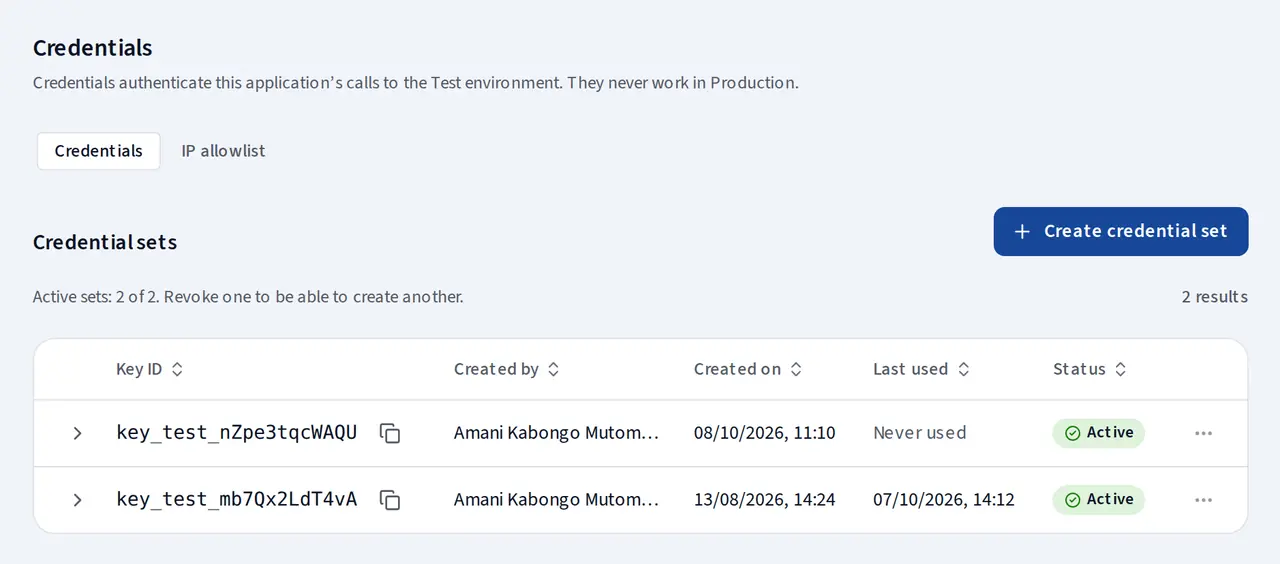
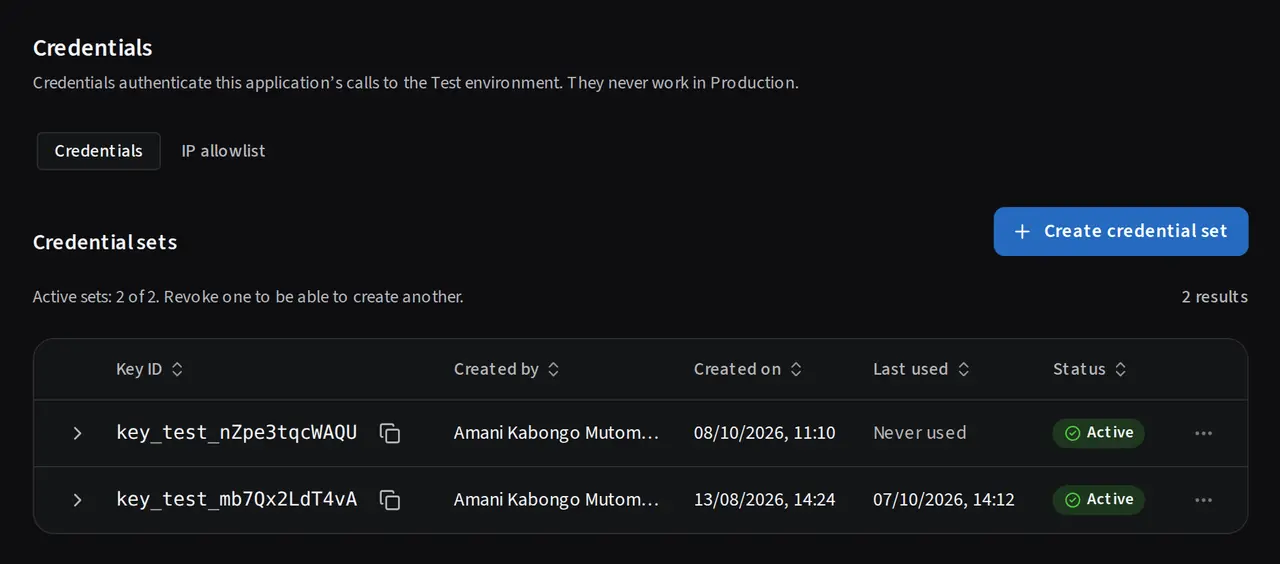
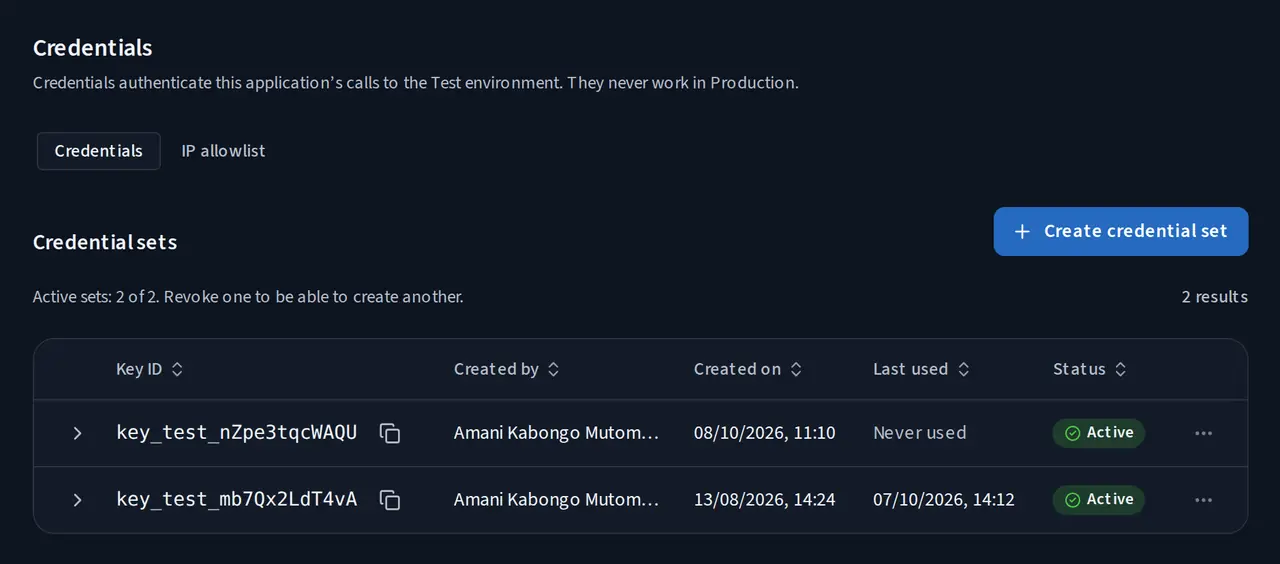
Five security facts
Every member signs in with a second factor or RDCPASS.
Secrets are shown only once.
Test and production never mix.
In production: an IP allowlist and an mTLS certificate.
Every action goes to the exportable audit log.
Go live
Standard review in 5 to 10 business days. Test is free, Business prepaid, Enterprise invoiced.
Business file
RCCM, ID NAT, NIF and articles of association
Application file
Use case, scopes, security questionnaire
Production credentials
After approval and an IP address list
For small teams and national institutions
The same platform serves a two-person startup and a national bank. Only the billing model and support level change.
Startups & SMEs
Launch verified onboarding without a compliance department, and pay only for what you use.
See pay-as-you-go pricingBanks, telecoms & large platforms
Verify millions of customers with batch processing, a monthly invoice and dedicated support.
Talk to salesPublic sector & NGOs
Deliver services and aid to the right person, exactly once, with the identity citizens already hold.
See public-sector use cases